


How to Properly Fit a Dog Collar


You've recently adopted a new pup into your family and are picking out his first dog collar. How do you know what size he needs? A properly fitting dog collar is important for several reasons, so be sure you measure and take the following factors into consideration.
Why Your Dog Needs a Collar
Does your dog need a collar? Yes.
Some states and areas require that dogs wear a collar with ID tags. It's crucial for a dog to have an identification tag with their name and your address and contact information, even if they're microchipped. This way, if your pup gets lost, it will be easy for someone to find out how to bring them back to you. They should also wear tags showing that they have their rabies vaccination as well as any other licenses that apply to them. Different states may have different requirements, so check and see what is required in your area.
When you're picking out a collar for your dog, it's important to make sure that you are getting a collar that fits them properly. There are risks involved if the collar is too loose as well as if it's too tight.
If your dog's collar is too loose, he may slip out of it. You don't want to risk your dog running off and getting lost. A collar that's too tight might also be an easy way for your dog's paws, teeth, or mouth to get caught on it, which could cause injuries. Last of all, a collar that's too loose can possibly cause skin irritation by rubbing against your dog's skin over and over in the same spot.
On the other hand, if your dog's collar is too tight, they are at risk of having their airway blocked off which can lead to asphyxiation. A tight collar may also cause your pup to twist his neck or move his head to alleviate some of the pressure. This can cause strained neck muscles and other injuries over time. Lastly, just like with a loose collar, a tight collar may also cause skin irritation due to rubbing.
How to Measure Your Dog for a Collar
Now that you know the risk of a collar that's too loose and a collar that's too tight, it's time to find one that fits them just right!
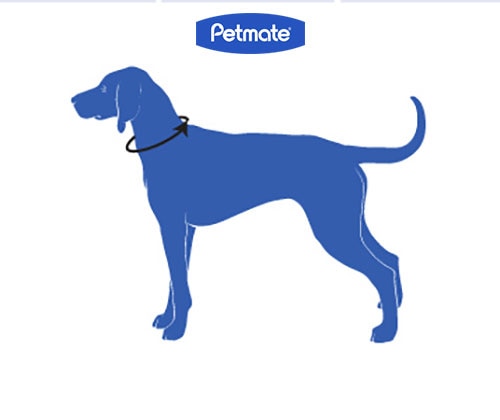
To do this, you will want to measure your dog's neck with a cloth measuring tape (preferably) or at least one that is soft and flexible. If you don't have one, you can use a string or ribbon instead. Measure the circumference of your dog's neck. Take the number from that measurement and add one to three additional inches depending on the size of your dog. For small dogs (10 pounds and under), add one inch. For medium-sized breeds, add two inches. For larger dogs, add three inches. This will help to ensure that there is a bit of extra room so that it won't be too tight.
Another thing to consider is the width of the collar. Small dogs should have collars that are narrower in width. Narrow collars will weigh less than collars that are wider which makes them a better option for smaller dogs. Larger dogs, such as Great Danes or German Shepherds, will benefit more from a wider collar. Wider collars are usually more durable and will hold up to more tugging and movement from a larger, stronger dog. You may also want a wider collar if your dog has a thicker neck, like breeds such as Greyhounds or Whippets.
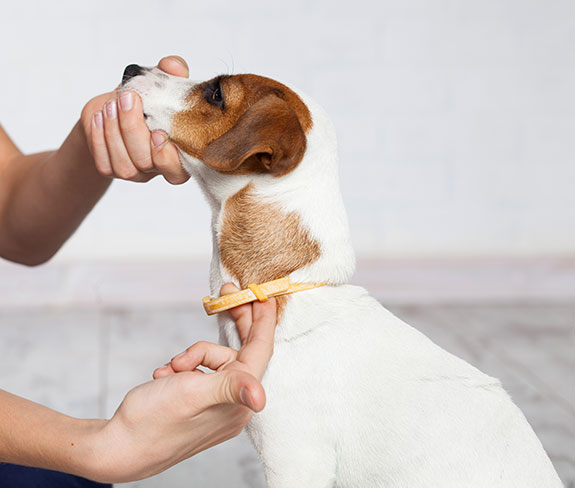
Be sure that you also use the two-finger rule as your securing and adjusting your dog's collar. The two-finger rule means that you should easily be able to slide two of your fingers between your dog's collar and their skin. The collar should feel comfortably snug when you do this and not too loose.
Don't Forget to Regularly Check Your Dog's Collar
Even if your dog's collar fits perfectly now, this may not always be the case. your dog may grow, gain or lose weight, etc. causing their collar to fit more tightly or loosely. The collar itself may also wear out over time or get stretched out, so it's a good idea to check it regularly and replace it whenever necessary. Remember that your puppy's collar probably won't fit them for very long, so be sure you upgrade it with them as they grow.
Additional Resources:
- https://www.skinners.co.uk/news/how-to-fit-a-dog-collar-properly/
- https://blog.petmeds.com/1800petmeds/how-to-make-sure-your-dogs-collar-fits-properly/
- https://vetexplainspets.com/how-tight-should-dog-collar-be/
- https://www.petful.com/pet-products/choose-right-size-dog-collar/
- https://blog.dogids.com/why-choose-a-wide-collar/
- https://www.americanhumane.org/fact-sheet/identification-tags-microchips/


